

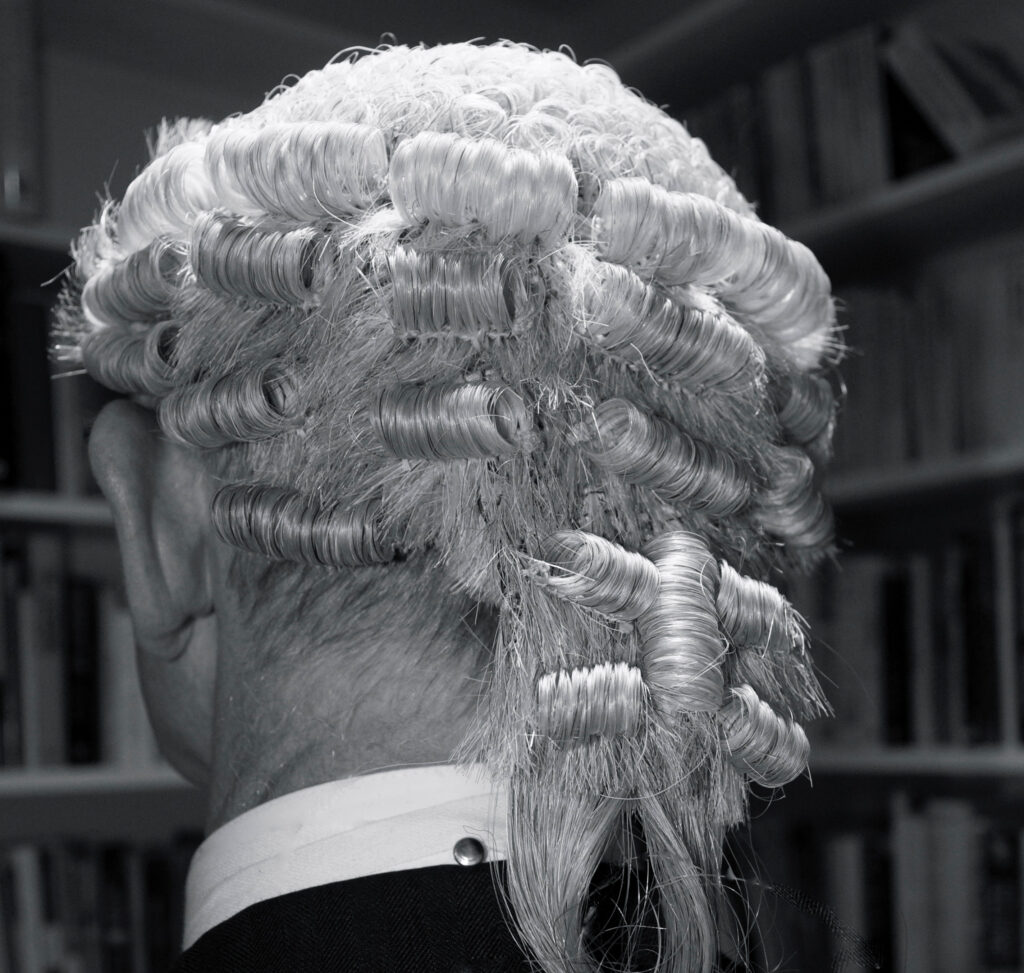
Voice for the courtroom is an essential tool in the barrister’s extensive skillset.
Artificial Intelligence (AI) is widely becoming an additional, if not essential, tool of the barrister’s work in researching and preparing cases.
Is a barrister’s voice likely to be replaced by AI in the years ahead?
Currently there are plenty of news stories around which cite AI as an important part of the legal world’s daily function. Vast quantities of case law, precedents, and statutes can be analysed using AI – saving time as it can swiftly perform legal research and pull out information in a fraction of the time a human could perform that task.
There is extensive use of human voices by AI programmes, too. Many actors have been paid by developers such as Meta, with their platforms which include Facebook, Instagram, Threads and WhatsApp, to record their voices for various AI speaking projects.
AI is performing story-telling roles, having basic conversations with humans and voicing broadcast advertisements on radio, TV and social media.
Will there come a day when AI will be able to present and argue a case in court in front of a human judge. How will barristers learn to develop their speaking skills if AI programmes can create credible reasoning conversations?
Looking at this view of how AI is shaping the future of legal practice has prompted consideration of the next step for AI; gathering, prioritising and engineering spoken arguments for the courtroom.
Imagine all the information a barrister has historically collated and how that has impacted their understanding of a case and the formation of their skeleton arguments. During the process of creating a skeleton, information is weighed and assessed in consideration of the case in hand.
Presentation of information in court is still, to some extent, oral. Based on their research and how they wish to approach the case, the speaker selects what they want to say and has a wealth of choice in their vocal toolbox to access. Whether to approach the case quietly, respectfully and thoughtfully or to choose a vocal style that is excitable, challenging and questioning.
Historically, the experienced barrister in court presents their clients’ cases in the most favourable way, according to individual circumstances, using their own raft of personal styles.
The opposing barrister will react to selected points and attempt to counter them, using their voice to highlight their points of view. Will AI be handling this as well as humans in the next few years? There will be no arguments, potentially, just facts.
All these questions about the AI voice in the courtroom and no answers as yet. We will all be watching how AI is used by organisations and how effectively AI will perform human speech in interviews, debates and interrogations over the coming months and years.
However, in the meantime, speaking not just clearly, but with conviction, speaking with authority and speaking the truth are the gifts belonging to humans. It is imperative to look after your voice, to speak well and to deliver your arguments with clarity, impact and confidence in the courtroom if you are a barrister or if you simply wish to communicate well.
For more information on how to achieve your speaking goals, please get in touch.