
We used to say that people who spoke ‘very well’ without a regional accent, spoke Queen’s English (or BBC English, or even Received Pronunciation). It was the product of educational establishments being set up across the United Kingdom, usually boarding schools, where the teachers spoke with an upper-class accent. This accent was acquired by the pupils and was a non-regional specific accent.
During Queen Elizabeth II’s long reign, her accent changed a lot, becoming less haughty and high pitched and becoming warmer and more connected. She became a lot less RP between the 1950s and the 1980s.
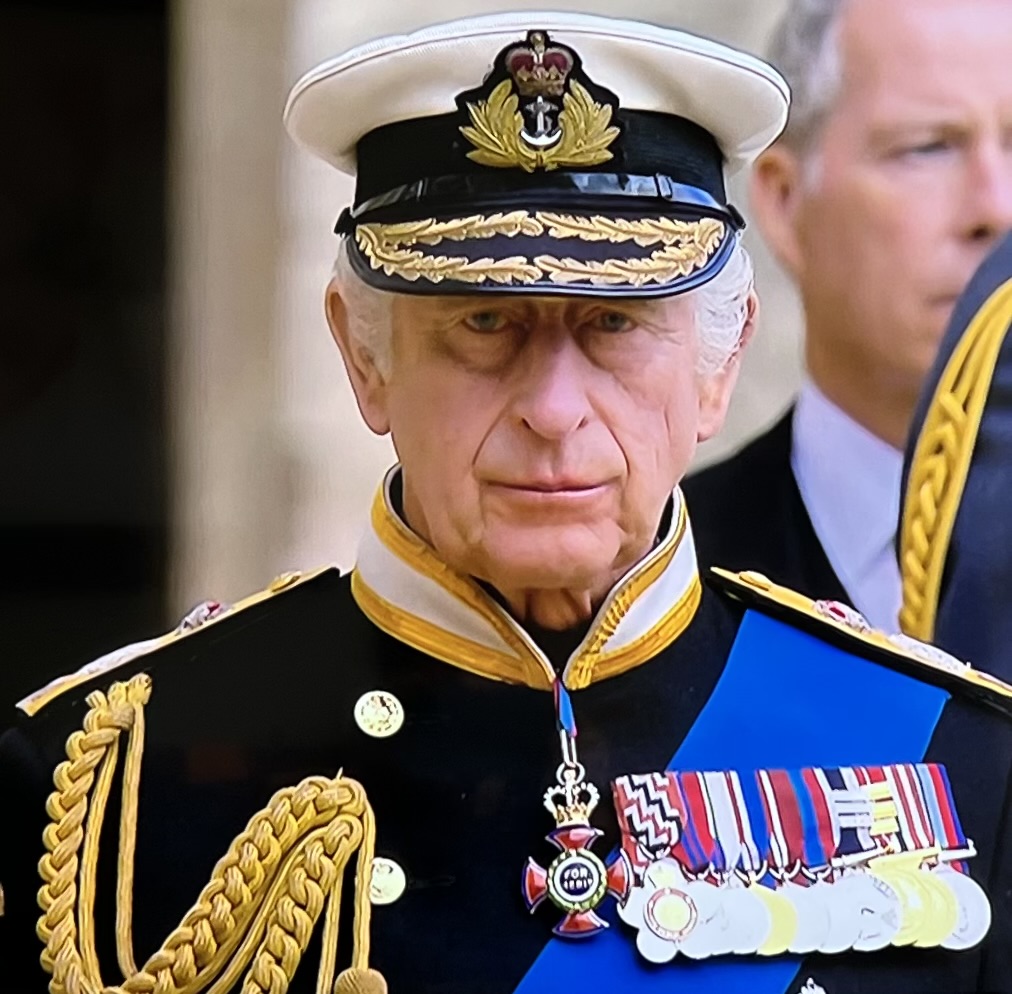
Now we have a king on the throne again, after 70 years. We now refer to the accent of the upper classes as ‘King’s English’ and the model for this is King Charles III. Fewer and fewer people speak with an upper-class English accent, but King Charles has a specific style of speaking which has not passed down to his sons.
Due to social change which began in the 1960s, perception of accent belonging to the upper class changed rapidly from being prestigious, to being a symptom of unfair privilege.
Received Pronunciation is giving way to its modern equivalent Standard Southern British (SSB), which is spoken by Princes William and Harry. An easy example of this is words ending in ‘Y’ as in ‘lovely’ ‘happy’ and ‘empathy’. In King Charles’ RP accent, the final sound is a short ‘i’ sound that is found in the word ‘kit’. William and Harry both lengthen the final sound to ‘ee’, so we hear ‘lovelee’, ‘happee’ and ‘empathee’.
Another change in modern RP is the way both William and Harry omit the ‘t’ sound at the end of a word during a sentence, so it becomes a kind of glottal-stop. You wouldn’t hear King Charles say, ‘Britain is the great country i[ʔ] is today’, making a mid-sentence glottal stop when the ‘t’ is followed by a vowel. Another example of a mid-sentence glottal stop is found in this sentence: ‘I see i[ʔ] in the people I mee[ʔ] around the world.
Another change in modern RP is the habit of ‘up-speak’ where the speaker’s pitch rises at the end of a sentence, in a ‘question style’ has been adopted by Harry. This hasn’t been observed yet in the King’s English.
These are just a few examples of how the upper-class accent is changing in the UK. Accent comprises the way we speak, the rhythm, pattern and pronunciation of words. Change happens slowly but fundamentally; however, it is always important to be able to understand each other, whatever our accent.
Whether you speak English as a second language, or if you have a regional accent, or you think you speak too quickly or mumble, it is perfectly possible to develop clarity. It is also perfectly possible to adapt your delivery to speak with an RP accent. Your accent could be more like the King’s English, in King Charles’ style, it could be a more modern RP accent like Princes William and Harry, or simply adapt to being Standard Southern British.
For help with your accent, for clarity and impact, get in touch for a free consultation.