
 This week I heard a very interesting story on Radio 4 about voices. What interested me in particular was the different voices that author, Nikesh Shukla, identified that he uses to suit different occasions.
Nikesh uses ‘the voice for his family and friends’: “Cursive glottal stopping, syllable swapping, rhythmic beats of anarchic remixed English.” He has ‘the voice for writing for Westerners’ and ‘the voice of his own language’.
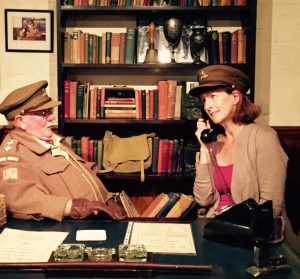
Nikesh also mentioned that his Mum had a ‘Phone Voice’. My mother had a ‘Phone Voice’ too, back in the ‘70s when fewer people used telephones on a regular basis. It made me laugh at the time as it sounded a bit pretentious but really, she was just being precise and clear and maybe just a little self conscious.
However familiar these voices are to you, what passes for everyday voice will not stand the test of performance.
For the occasion of speaking in public, your voice should be clearer, your articulation should be stronger and your pace should be slower than your everyday, friends and family voice. Your ‘Presentation voice’ should also be in harmony with your audience.
Many of us fall into speech habits or patterns with our voice using little of the range or power available. This means that there is a lot of untapped potential to make your presentation voice more impactful. Before your next presentation, make a recording of your rehearsal and listen back objectively. Is it clear, audible and compelling?
Take time to rehearse your presentation voice – more than once, preferably more than twice – to capture your audience’s attention, engage their interest and ensure your message is well-received. It won’t be Mum’s ‘Phone Voice’ but you will be on the way to using your professional ‘Presentation voice’ which is very suitable for the occasion.
For more information on how to use your voice more effectively, get in touch.